Business software and ERP solutions are no longer just about powerful functionality.
The gold standard has shifted to systems that prioritize usability, adoption, and real operational value.
Whether you’re replacing spreadsheets or exploring alternatives to legacy systems, Intuitive ERP System design has to be at the forefront.
What Is Intuitive ERP System Design?
Human-centric ERP design means placing the users of the system at the core of the development process. Rather than focusing solely on technical complexity or rigid architecture, this approach emphasizes:
- Intuitive interfaces
- Streamlined workflows
- Clear navigation
- Personalized views and dashboards
- Minimal training required
Investment in UX isn’t a luxury; it’s a strategic necessity for ERP success.
The Real Cost of Poor UX in ERP System
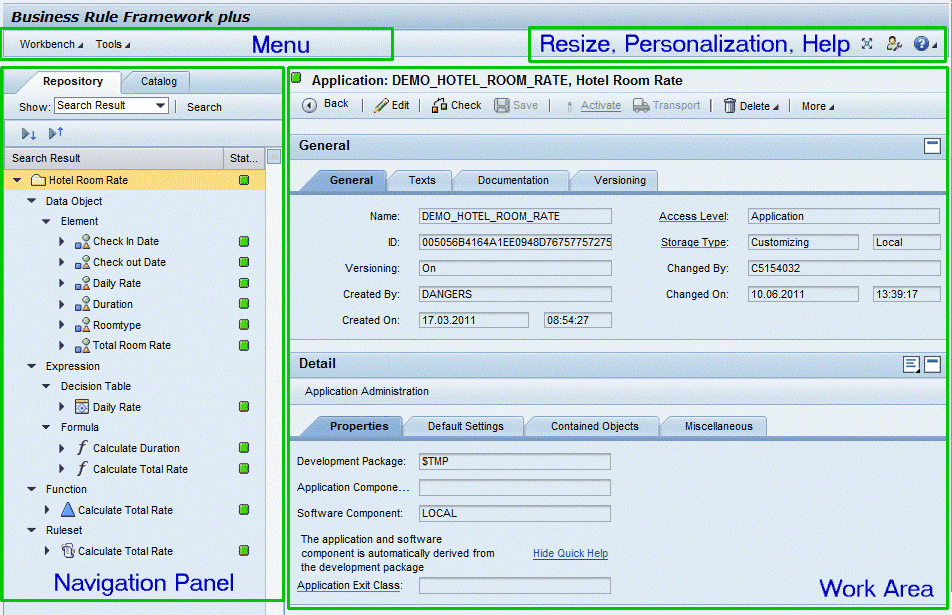
Traditional or legacy ERP systems often struggle with:
- Complex, confusing navigation
- Outdated UI paradigms
- Rigid, non-personalized screens
- High dependency on training and support
These challenges lead to low engagement, poor data quality, and operational bottlenecks, ultimately reducing the ROI of digital transformation projects.
SAP UI:
NetSuite UI:
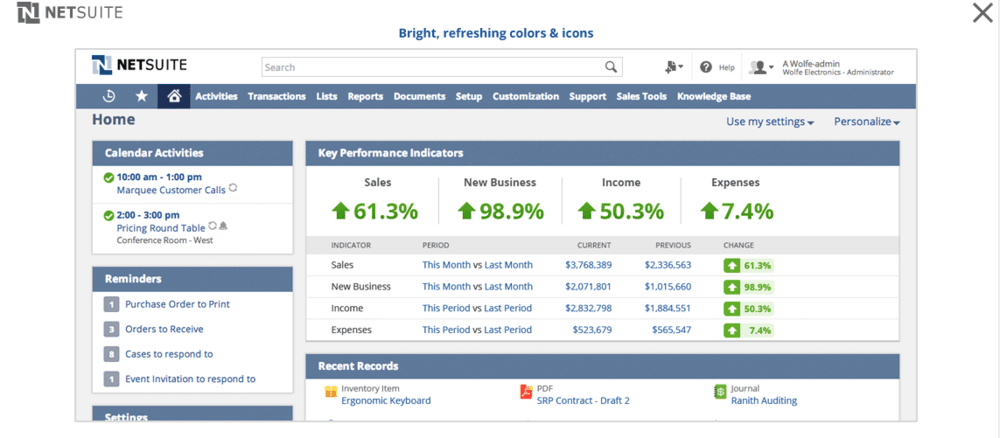
Real market perspective: The ERP market is expected to exceed $165 billion in 2025 and it is rapidly shifting toward cloud, mobile, and user-centric platforms precisely because companies want ERP solutions that users actually use.
Principles of Human-Centric ERP Design
A modern ERP design follows clear principles that ensure adoption and long-term success:
Empathy
Understand real user needs, not assumptions. Deep user research is the foundation of design that works for people in their daily context.
Iterative Prototyping & Testing
Rather than building a full system in isolation, modern ERP design uses prototypes and continuous testing to refine the experience.
Contextual Awareness
Understanding how and where users interact with systems, desktop, mobile, location challenges, task flows, yields more relevant and efficient UX.
Accessibility
ERP platforms must support diverse users, including those with color vision deficiencies or mobility constraints.
Ethical & Impactful Design
Intuitive ERP System’s UX focuses on delivering meaningful impact, not just visual appeal.
These principles are essential to designing systems that empower users, reduce cognitive load, and drive engagement.
Odoo Vs. SAP & NetSuite: How is Odoo UI built on Modern Principles.
Odoo ERP has become a standout example of human-centric design in the ERP market:
- Modular, intuitive design: Users can customize screens without heavy development.
- Role-based views: Users see only what’s relevant to their function, reducing confusion.
- Mobile-friendly interfaces: Users can access dashboards and tasks on the go.
- Scalable and flexible: Businesses of all sizes- from SMBs to large enterprises, everyone can adopt Odoo at their own pace.
- AI and automation integration: Newer versions of Odoo embed AI features that enhance UX by automating routine tasks and offering predictive insights.
Unlike many legacy systems where changes are difficult, Odoo UI evolve with your business, not against it.
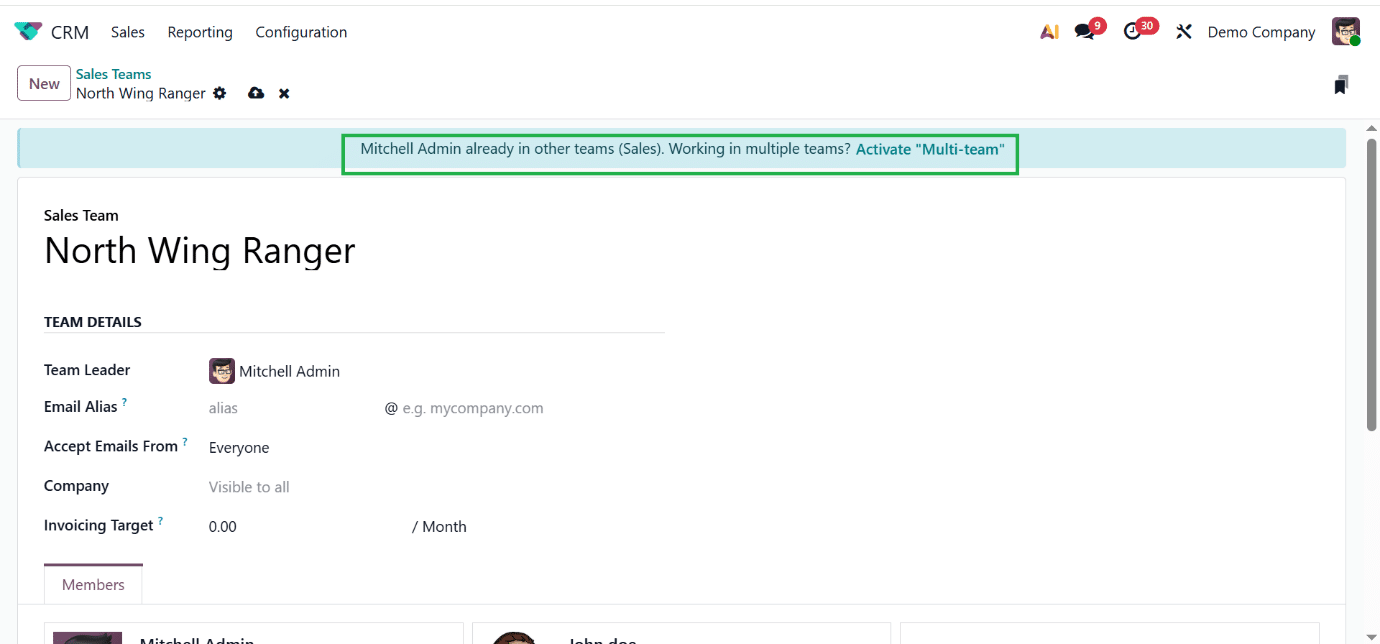
Let’s consider a very simple example of the Odoo Sales app to understand how modern UX can increase your efficiency:
In the Odoo Sales app, the Multi-Sales Team setting is disabled by default. When a sales manager tries to assign a salesperson to more than one team, Odoo automatically detects the need and shows a contextual message with a one-click option to enable the setting.
The user doesn’t need to leave the screen, search through settings, or redo their work. Odoo activates the configuration instantly and lets them continue.
This small interaction highlights Odoo’s human-centric UX, understanding user intent, reducing friction, and enabling faster adoption, better data accuracy, and smoother operations.
User experience in ERP systems isn’t about aesthetics, it’s about:
- Driving higher adoption rates
- Reducing training and support costs
- Improving data quality and productivity
- Supporting better strategic decisions
Platforms like Odoo ERP, with their modular design, intuitive user experience, and mobile & AI capabilities, demonstrate that powerful business software can remain user-friendly, scalable, and ROI-centric.
Investing in human-centric ERP design today isn’t just smart, it’s essential for growth, efficiency, and long-term success.
Schedule Demo for Odoo ERP & see it’s user-centric UI for yourself.